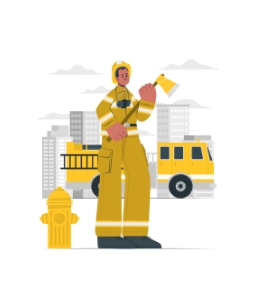
Fire Safety Officer
Fire Safety Officers play a vital role in saving lives and resources.
Introduction
A Fire Safety Officer is someone who is responsible for maintaining and ensuring complete fire safety in a locality, organising body, an institute, company or a facility. A Fire Safety Officer or a Fire Safety Engineer usually works under the local or state government. They also work for different organisations as well as companies that have facilities, in order to necessitate fire safety for their own staff.
In case you are looking for a job in this career please note the process to apply for job
Get assistance through AI Matching for your Job Application Process on our partner platform - Jobs Matcher AI!
Please follow these easy steps:
Step 1: Register and Complete Your Profile on https://jobsmatcherai.com/signup
Step 2: Upload Your CV and Utilise AI / import profile data from your CV (PDF) or pasted text.
Step 3: Explore AI-Matched Opportunities - see AI job suggestions directly on your profile page based on these employer matches.
Step 4: Generate Your ATS-Friendly CV Preview
Step 5: Complete a Comprehensive SWOT Analysis
We look forward to your participation and happy placement!
For any other information / guidance on jobs or to meet a counsellor contact careers@eduberance.com
Explore Realise and Achieve Your True Potential
Let's dive back to the career details
What does it mean to be a Fire Safety Officer?
Fire Safety Officers are responsible for conducting fire safety inspections, reviewing building plans to ensure compliance with fire codes, developing and delivering fire safety training programs, investigating fire incidents, and enforcing fire safety regulations.
Typically, becoming a Fire Safety Officer involves obtaining a degree or certification in fire science or a related field, gaining experience as a firefighter or fire inspector, and completing specialized training courses. Some positions may require additional certifications or licenses.
The career path for a Fire Safety Officer can lead to roles such as Senior Fire Safety Inspector, Fire Marshal, Fire Safety Manager, or even positions in emergency management and public safety administration. Advancement often depends on experience, education, and certifications.
Compared to firefighters who directly combat fires, Fire Safety Officers focus on prevention and risk mitigation. Unlike emergency medical technicians (EMTs) who provide medical care, Fire Safety Officers are primarily concerned with fire safety and code enforcement. They work more closely with building owners, developers, and the public than some other emergency services roles.
What educational background is required to become a Fire Safety Officer?
You will build a strong knowledge base in fire science, building codes, safety regulations, risk assessment, fire investigation techniques, and emergency response protocols. Understanding of hazardous materials and fire suppression systems is also crucial.
Key subjects include fire dynamics, fire protection systems, building construction, hazardous materials handling, emergency management, and relevant laws and regulations. Courses in communication and public speaking are also beneficial.
Diploma and certification courses in fire science, fire prevention, building inspection, and hazardous materials handling can significantly enhance your qualifications. Certifications such as Certified Fire Inspector (CFI) or Certified Fire Protection Specialist (CFPS) are highly regarded.
After graduation, you can pursue entry-level positions in fire safety departments, building inspection agencies, or private sector companies focused on fire protection. Gaining practical experience through internships or volunteer work is highly recommended.
While not always mandatory, a Master's Degree in Fire Science, Emergency Management, or a related field can open doors to advanced positions and leadership roles. It provides a deeper understanding of complex fire safety issues and enhances research capabilities.
PhD programs in Fire Science or related fields are primarily for individuals interested in research, academia, or high-level consulting roles. A PhD can lead to opportunities in developing new fire safety technologies, conducting advanced research, and teaching at the university level.
Are there specific entrance exams to take?
Specific entrance exams vary depending on the jurisdiction and the employer. Civil service exams, aptitude tests, and physical fitness tests are common. Some agencies may also require specific certifications or licenses as part of the application process. Research the requirements for the specific organizations you are interested in.
Where can I get the right education and training?
Top institutions abroad include the University of Maryland (USA), Worcester Polytechnic Institute (USA), and the University of Edinburgh (UK). These institutions offer comprehensive programs in fire science, engineering, and risk management.
Leading institutes in India include the National Fire Service College (NFSC) in Nagpur, which offers specialized fire engineering and safety management courses. Various universities and polytechnics across India also offer diploma and degree programs in fire safety and industrial safety.
What skills are essential for success as a Fire Safety Officer?
Essential skills include strong knowledge of fire codes and regulations, excellent communication and interpersonal skills, attention to detail, problem-solving abilities, analytical skills, and the ability to work independently and as part of a team. Physical fitness and the ability to handle stressful situations are also important.
What personal qualities contribute to excelling in this field?
Key dispositions include a strong sense of responsibility, integrity, attention to detail, a commitment to public safety, the ability to remain calm under pressure, and a proactive approach to problem-solving. Empathy and the ability to communicate effectively with diverse populations are also crucial.
Does personality type matter?
Individuals with personality traits such as conscientiousness, responsibility, and a strong sense of duty tend to excel in this role. Detail-oriented and analytical thinkers who are also good communicators thrive in this profession. The ability to remain calm and make sound decisions under pressure is also highly valuable.
What are the job prospects for Fire Safety Officers?
Fire Safety Officers can find employment in local, state, and federal government agencies, fire departments, building inspection agencies, insurance companies, private sector companies, and consulting firms specializing in fire protection and safety.
Internship opportunities are available with fire departments, building inspection agencies, and private sector companies focused on fire protection. Internships provide valuable hands-on experience and networking opportunities.
Part-time roles may be available in some municipalities or private sector companies, particularly in building inspection or fire safety training. These roles can be a good way to gain experience while pursuing further education or other commitments.
Freelancing opportunities may exist for experienced Fire Safety Officers in areas such as fire safety consulting, risk assessment, and training. Building a strong reputation and network is essential for success in freelance work.
Industries that commonly hire Fire Safety Officers include construction, manufacturing, healthcare, education, hospitality, and government. Any industry that involves building operations, public safety, or hazardous materials handling requires fire safety expertise.
Common job titles include Fire Safety Inspector, Fire Prevention Officer, Fire Marshal, Fire Safety Manager, Building Inspector, and Emergency Management Specialist.
Strategies for finding jobs include networking with professionals in the field, attending industry events, searching online job boards, contacting local fire departments and government agencies, and utilizing career services at educational institutions.
The expected growth rate for Fire Safety Officers is generally stable, driven by increasing awareness of fire safety, stricter building codes, and a growing emphasis on public safety. Demand may vary depending on the specific region and industry.
What can you expect to earn as a Fire Safety Officer?
The salary for Fire Safety Officers varies depending on experience, education, location, and employer. Entry-level positions may start around $40,000 per year, while experienced professionals can earn upwards of $80,000 or more. Salaries in metropolitan areas and government agencies tend to be higher.
Is entrepreneurship a viable path?
Entrepreneurship is a viable path for experienced Fire Safety Officers. You can start your own fire safety consulting business, offering services such as risk assessments, fire safety training, building inspections, and fire protection system design. Building a strong reputation and network is crucial for success.
Entrepreneurship offers greater autonomy and potential for higher earnings, but also involves greater risk and responsibility. Traditional employment provides job security and benefits, but may offer less flexibility and earning potential. Consider your risk tolerance, financial resources, and career goals when making this decision.
How does experience shape your career?
Experience is crucial for advancement in this field. Entry-level positions may require a few years of experience in fire safety or a related field. Advanced roles typically require several years of experience and specialized certifications.
College work experiences such as internships, volunteer work, or part-time jobs in related fields can provide valuable practical experience and networking opportunities. Participating in student organizations focused on fire safety or emergency management can also enhance your qualifications.
Training requirements vary depending on the specific position and employer. Initial training typically includes coursework in fire science, building codes, and safety regulations. Ongoing training is required to stay up-to-date on the latest technologies and best practices.
What is it really like to be a Fire Safety Officer?
Pros include the opportunity to make a positive impact on public safety, job security, and opportunities for advancement. Cons include exposure to stressful situations, potential for physical risk, and the need to stay up-to-date on changing regulations.
Consider whether this career aligns with your passions, skills, what the world needs, and what you can be paid for. If you are passionate about public safety, possess strong analytical and communication skills, and are committed to preventing fires and protecting lives, this career may be a good fit for your Ikigai.
Work-life balance can be challenging in this field, particularly during emergencies or large-scale events. However, many positions offer regular hours and predictable schedules. Prioritizing self-care and setting boundaries is essential for maintaining a healthy work-life balance.
Maintaining good mental health involves practicing self-care, seeking support from colleagues and supervisors, and utilizing employee assistance programs when needed. Developing resilience and coping mechanisms for dealing with stress is crucial.
Emotional intelligence is highly important in this role. Fire Safety Officers must be able to communicate effectively with diverse populations, handle stressful situations with empathy and professionalism, and build strong relationships with colleagues and stakeholders.
A strong intelligence quotient (IQ) is beneficial for understanding complex fire safety regulations, analyzing data, and solving problems. Critical thinking and the ability to learn new information quickly are also essential.
The working environment can vary depending on the specific position and employer. Some Fire Safety Officers work primarily in office settings, while others spend much of their time in the field conducting inspections or investigating fire incidents. Exposure to hazardous environments may be required in some situations.
What resources can help you succeed?
Essential tools and resources include fire codes and regulations, building plans, inspection checklists, fire investigation equipment, communication devices, and access to relevant databases and software. Professional development resources, such as training courses and conferences, are also crucial.
Valuable certifications and licenses include Certified Fire Inspector (CFI), Certified Fire Protection Specialist (CFPS), and certifications in hazardous materials handling and emergency management. Specific requirements vary depending on the jurisdiction and employer.
Professional associations include the National Fire Protection Association (NFPA), the International Association of Fire Chiefs (IAFC), and the International Code Council (ICC). These associations offer valuable resources, networking opportunities, and professional development programs.
Frequently Asked Questions
Common questions include: What are the education requirements? What skills are needed? What is the salary range? What are the career advancement opportunities? What are the working conditions like? What are the most challenging aspects of the job?
What advice can help you thrive in this career?
Network with professionals in the field, seek out mentorship opportunities, stay up-to-date on the latest technologies and best practices, pursue relevant certifications, and continuously seek opportunities for professional development. Develop strong communication and interpersonal skills, and always prioritize safety.
A Final Overview
A career as a Fire Safety Officer offers a rewarding opportunity to protect lives and property through prevention and education. It requires a strong understanding of fire science, building codes, and safety regulations, as well as excellent communication and problem-solving skills. With dedication and continuous learning, you can make a significant impact on public safety.