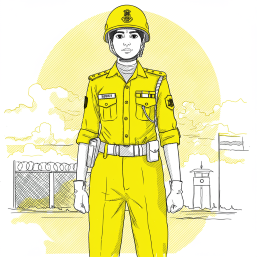
Border Security Force BSF Officer
All About How To Become A Border Security Force BSF Officer
Introduction
The State Armed Police Battalion used to guard India’s borders till the Indo-Pak war in 1965. On 9th April, 1965, when Pakistan attacked Sardar Post, Chhar Bet, and Beria Bet in Kutch, the inadequacy of the State Armed Police Force was exposed. This led to the need for a specialised force to man the international borders with Pakistan and other neighbouring countries. Thus the Border Security Force (BSF) came into implementation on 1st Dec 1965. Shri KF Rustamji was the founding father and the first chief of the BSF.
Important Note The Jobs in BSF are provided only through the central government and its authorised agencies. Please do not apply for this job with Eduberance or other private agencies.
In case you are looking for a job in this career please note the process to apply for job
Get assistance through AI Matching for your Job Application Process on our partner platform - Jobs Matcher AI! Please follow these easy steps:
Step 1: Register and Complete Your Profile on https://jobsmatcherai.com/signup
Step 2: Upload Your CV and Utilise AI / import profile data from your CV (PDF) or pasted text.
Step 3: Explore AI-Matched Opportunities - see AI job suggestions directly on your profile page based on these employer matches.
Step 4: Generate Your ATS-Friendly CV Preview
Step 5: Complete a Comprehensive SWOT Analysis We look forward to your participation and happy placement!
For any other information / guidance on jobs or to meet a counsellor contact careers@eduberance.com Explore Realise and Achieve Your True Potential
Let's dive back to the career details
What does it mean to be a BSF Officer?
BSF Officers are responsible for border patrolling, preventing smuggling and infiltration, maintaining law and order in border areas, conducting search operations, and participating in disaster relief efforts. They also manage border outposts and coordinate with other security agencies.
The primary route is through the Union Public Service Commission (UPSC) Central Armed Police Forces (Assistant Commandants) Examination. Candidates must meet specific age, educational, and physical standards. The selection process includes a written exam, physical efficiency tests, medical examination, and an interview.
A BSF Officer typically starts as an Assistant Commandant and can rise through the ranks to Commandant, Deputy Inspector General, Inspector General, and ultimately, Director General. Promotions are based on performance, experience, and available vacancies. Opportunities for specialized training and assignments are also available throughout the career.
While all armed forces personnel serve the nation, a BSF Officer's focus is specifically on border security and management. Unlike the Army, which primarily deals with external threats and wartime situations, the BSF focuses on preventing cross-border crimes, maintaining peace in border regions, and assisting in internal security during elections or emergencies.
What education and knowledge are essential for a BSF Officer?
A bachelor's degree in any discipline from a recognized university is the minimum educational requirement. However, candidates with backgrounds in criminology, political science, defense studies, or law may have an advantage.
General Knowledge, Current Affairs, Reasoning, Numerical Ability, and English Language are crucial for the UPSC CAPF exam. Additionally, knowledge of Indian history, geography, polity, and economy is beneficial. Physical fitness and awareness of national security issues are also important.
While not mandatory, courses in disaster management, security management, or human rights can enhance a candidate's profile. Certifications in first aid and weapons handling can also be advantageous.
A Bachelor's degree in any field is accepted, but degrees like BA in Political Science, BSc in Defense Studies, or a degree in Criminology can provide a strong foundation.
A Master's degree is not mandatory but can enhance your application and potentially open doors to specialized roles within the BSF. Relevant fields include security studies, international relations, or public administration.
A Ph.D. is generally not required or directly relevant for becoming a BSF Officer. However, it could be beneficial for individuals interested in research or academic roles related to national security later in their career.
What exams do I need to take?
The primary entrance exam is the UPSC CAPF (AC) Exam. This exam is conducted annually by the Union Public Service Commission (UPSC) for recruitment to the post of Assistant Commandants in various Central Armed Police Forces, including the Border Security Force (BSF).
Where can I get the education I need?
While not directly related to BSF recruitment, institutions offering courses in international security, border management, or counter-terrorism studies can provide valuable knowledge. Examples include universities in the UK, US, and Australia.
The National Defence Academy (NDA), Indian Military Academy (IMA), and Officers Training Academy (OTA) provide training for officers in the armed forces. Additionally, various universities offer courses in defense studies, criminology, and political science. The BSF Academy in Tekanpur provides specialized training for BSF personnel.
What skills are crucial for success?
Leadership, physical fitness, mental resilience, communication, decision-making, problem-solving, and knowledge of weapons handling are crucial. Adaptability, teamwork, and a strong sense of discipline are also essential.
What personal qualities are important?
Patriotism, courage, integrity, discipline, selflessness, and a strong sense of duty are vital. A BSF Officer must be able to remain calm under pressure, make sound judgments, and inspire their subordinates.
What kind of personality traits are suited to this career?
Individuals with a strong sense of responsibility, a proactive approach, and the ability to work effectively in a team are well-suited. Extroverted personalities who can communicate effectively and build rapport are also beneficial.
What are the job prospects and opportunities?
Assistant Commandant, Commandant, Deputy Inspector General, Inspector General, Director General are some of the roles available, along with specialized postings in intelligence, operations, training, and administration.
Internship opportunities within the BSF are limited and typically offered to students pursuing degrees in specific fields like security studies or law. These are usually unadvertised, and one would have to make direct contact with the BSF to explore options.
Part-time job opportunities directly within the BSF are rare. However, individuals with relevant skills and experience may find part-time roles in security agencies or organizations working in border areas.
Freelance opportunities directly related to BSF operations are unlikely. However, consultants with expertise in security management, risk assessment, or technology related to border security might find freelance work with private companies or organizations involved in border security projects.
Defense, security, law enforcement, intelligence, and disaster management are industries where skills and experience gained in the BSF can be valuable.
BSF Officer, Intelligence Officer, Security Analyst, Border Patrol Agent (in other countries), Immigration Officer, Customs Officer.
The primary route to joining the BSF is through the UPSC CAPF exam. Job boards, networking, and recruitment agencies specializing in security and defense can be helpful for finding related opportunities.
The demand for border security personnel is expected to remain stable due to ongoing security challenges. Career progression within the BSF is based on performance and experience.
What can I expect to earn?
The salary for a BSF Officer depends on their rank and years of service. An Assistant Commandant typically starts with a salary ranging from ₹56,100 to ₹1,77,500 per month (as per the 7th Pay Commission), along with various allowances and benefits.
Can I be an entrepreneur with this kind of experience?
Yes, experience in the BSF can be valuable for starting businesses in security consulting, private security agencies, disaster management services, or training and development for security personnel.
Entrepreneurship offers greater autonomy and potential for higher income but involves higher risk and uncertainty. A BSF job provides job security, stability, and a defined career path but may offer less flexibility and earning potential.
How can I gain relevant experience?
Experience in NCC, NSS, or other volunteer organizations can demonstrate leadership and teamwork skills. Participation in sports and adventure activities can enhance physical fitness and resilience. Volunteering with disaster relief organizations can also be beneficial.
Participate in NCC or NSS, join debating clubs to hone communication skills, and engage in physical fitness activities to build stamina and discipline. Take courses related to security studies or political science.
BSF Officers undergo rigorous training at the BSF Academy, which includes physical training, weapons handling, tactical training, and courses on law, human rights, and border management. Specialized training is also provided for specific roles and responsibilities.
What are the realities of this career?
Pros: Job security, opportunity to serve the nation, challenging and rewarding work, good benefits and allowances. Cons: High-stress environment, frequent transfers, risk of injury or death, demanding physical and mental requirements.
This career aligns with IKIGAI by allowing individuals to use their skills and passions to serve the nation (what the world needs), providing a stable income (what you can be paid for), and offering a sense of purpose and fulfillment (what you love and what you are good at).
Maintaining a work-life balance can be challenging due to the demanding nature of the job and frequent deployments. However, the BSF provides opportunities for leave and family support to help officers manage their personal lives.
The high-stress environment and exposure to traumatic events can impact mental health. The BSF provides counseling services and support programs to help officers cope with stress and maintain their well-being.
High emotional intelligence is crucial for leading and managing subordinates, dealing with challenging situations, and building relationships with local communities. Empathy, self-awareness, and strong interpersonal skills are essential.
A good IQ is important for decision-making, problem-solving, and understanding complex situations. BSF Officers must be able to analyze information, assess risks, and develop effective strategies.
The working environment can be challenging and demanding, with long hours, frequent deployments to remote areas, and exposure to harsh weather conditions. However, it also offers a sense of camaraderie and purpose.
What tools and resources can help me?
UPSC website, books and study materials for the CAPF exam, physical fitness training programs, online forums and communities for BSF aspirants, and the BSF website for information on recruitment and career development.
While there isn't specific licensing outside of the UPSC exam, certifications in First Aid and specialized security skills (if available) can be valuable.
While not specific to BSF, associations related to security and defense can provide networking and professional development opportunities.
Frequently Asked Questions
Q: What is the age limit for the UPSC CAPF exam? A: 20-25 years. Q: What are the physical standards? A: Specific height, weight, and chest measurements are required. Q: Is there any relaxation in age or physical standards for certain categories? A: Yes, as per government rules. Q: What is the training period? A: Approximately one year at the BSF Academy.
Expert Advice for Aspiring BSF Officers
Focus on physical fitness, improve your communication skills, stay updated on current affairs, and develop a strong understanding of national security issues. Be prepared for a challenging but rewarding career.
Key Takeaways
Becoming a BSF Officer requires dedication, hard work, and a strong sense of patriotism. It is a challenging but rewarding career that offers the opportunity to serve the nation and protect its borders. Physical fitness, mental resilience, and leadership skills are essential for success.