Cybersecurity Professional
All About How To Become A Cybersecurity Professional
Introduction
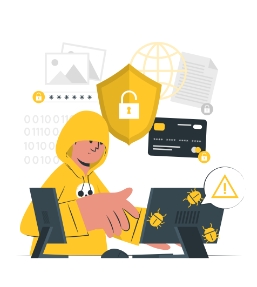
A cyber security professional is responsible for protecting an organisation’s network, infrastructure and data from hackers and other attacks in the form of virus, malware, spam etc. They are responsible for identifying and preventing threats that can, if allowed to escalate, cause grievous harm to the company.
Cyber Security deals with study of possible cyber threats and harms – technical, financial or personal. The course equips the professional to deal with many types of cyber crimes such as copyright breach, hacking, illegal mass-surveillance, computer virus, virtual pestering, identity threats, phishing etc. The interest in technology, innovative ideas, problem solving prowess, logic & concept are expected from students who wish to join this new and challenging field.
In case you are looking for a job in this career please note the process to apply for job
Get assistance through AI Matching for your Job Application Process on our partner platform - Jobs Matcher AI!
Please follow these easy steps:
Step 1: Register and Complete Your Profile on https://jobsmatcherai.com/signup
Step 2: Upload Your CV and Utilise AI / import profile data from your CV (PDF) or pasted text.
Step 3: Explore AI-Matched Opportunities - see AI job suggestions directly on your profile page based on these employer matches.
Step 4: Generate Your ATS-Friendly CV Preview
Step 5: Complete a Comprehensive SWOT Analysis
We look forward to your participation and happy placement!
For any other information / guidance on jobs or to meet a counsellor contact careers@eduberance.com
Explore Realise and Achieve Your True Potential
Let's dive back to the career details
What is Cybersecurity all about?
Cybersecurity Professionals design, implement, and manage security measures to protect computer systems and networks from threats. This includes tasks like identifying vulnerabilities, responding to security incidents, conducting security audits, and developing security policies.
A typical path involves obtaining a bachelor's degree in computer science, cybersecurity, or a related field, followed by gaining relevant certifications and experience through internships or entry-level positions. Continuous learning is crucial to stay up-to-date with emerging threats and technologies.
The field offers diverse career paths, including roles like Security Analyst, Security Engineer, Penetration Tester, Security Architect, Incident Responder, and Chief Information Security Officer (CISO). Each role focuses on different aspects of cybersecurity, allowing professionals to specialize based on their interests and skills.
While other IT fields focus on building and maintaining systems, Cybersecurity specifically emphasizes protecting those systems from threats. It requires a deep understanding of both technology and security principles, as well as a proactive approach to identifying and mitigating risks. Cybersecurity is often considered a specialized area within the broader IT landscape.
What educational background is needed to thrive?
A strong foundation in computer science, information technology, or a related field is essential. Understanding networking, operating systems, programming, and security principles is crucial. Pursuing certifications relevant to specific cybersecurity roles can also significantly enhance your knowledge and skills.
Key subjects include networking, cryptography, operating systems, programming (especially Python and scripting languages), database management, and security principles. Familiarity with cloud computing and virtualization technologies is also increasingly important.
Several diploma and certification courses can enhance your credentials, such as CompTIA Security+, Certified Ethical Hacker (CEH), Certified Information Systems Security Professional (CISSP), and various vendor-specific certifications (e.g., Cisco, Microsoft, AWS).
A bachelor's degree in cybersecurity, computer science, or a related field is often the entry point to the profession. It can lead to roles such as security analyst, network engineer and junior level positions in security operation centers (SOCs).
A master's degree in cybersecurity can provide more specialized knowledge and skills, making you more competitive for advanced roles such as security architect, security consultant, or management positions. It also opens doors to research and development opportunities.
A Ph.D. in cybersecurity is geared towards research and development roles, often in academia or advanced research labs. PhD programs enable you to explore new security challenges and solutions, pushing the boundaries of the field.
Are there any specific entrance exams required?
While specific entrance exams for cybersecurity roles are rare, standardized tests like the GRE may be required for admission to graduate programs. Certifications often require passing exams to demonstrate competency in specific areas of cybersecurity. Examples are the Certified Ethical Hacker (CEH) exam, the CISSP exam, and CompTIA Security+ exam.
Where can I get the best education and training?
Top international institutions include Carnegie Mellon University (USA), Massachusetts Institute of Technology (MIT) (USA), Stanford University (USA), University of Oxford (UK), and ETH Zurich (Switzerland).
Leading institutes in India include the Indian Institutes of Technology (IITs), the National Institutes of Technology (NITs), IIIT Hyderabad, Amrita University, and private institutions offering specialized cybersecurity programs.
What skills are crucial for success?
Essential technical skills include network security, cryptography, penetration testing, intrusion detection, incident response, and vulnerability management. Soft skills include problem-solving, analytical thinking, communication, teamwork, and the ability to learn continuously.
What personal attributes lead to success in Cybersecurity?
Important dispositions include a strong ethical compass, attention to detail, persistence, curiosity, and a proactive approach to identifying and mitigating risks. The ability to remain calm under pressure and effectively communicate complex technical information is also crucial.
What personality types thrive in cybersecurity?
Individuals with analytical and investigative personalities, who enjoy problem-solving and critical thinking, often excel in cybersecurity. Personality assessments like the Myers-Briggs Type Indicator (MBTI) can provide insights into your strengths and preferences, but no single personality type guarantees success. An inquisitive and detail-oriented mindset is very helpful in the field.
What job opportunities are available in Cybersecurity?
Common job titles include Security Analyst, Security Engineer, Penetration Tester, Security Architect, Incident Responder, Security Consultant, Cryptographer, and Chief Information Security Officer (CISO).
Internships are available at various companies, government agencies, and research institutions. Look for internships on company websites, job boards like LinkedIn and Indeed, and career services at universities.
Part-time opportunities may be available in areas like security consulting, vulnerability assessments, or security awareness training. These roles often require some experience or specialized skills.
Yes, freelancing is possible in areas like penetration testing, security auditing, and consulting. Platforms like Upwork and Freelancer.com can connect you with potential clients.
Cybersecurity professionals are needed in virtually every industry, including finance, healthcare, technology, government, retail, and education. Any organization that relies on computer systems and networks needs cybersecurity expertise.
Sample job roles include: Security Analyst (monitoring and threat analysis), Security Engineer (implementing security solutions), Penetration Tester (simulating attacks), Security Architect (designing secure systems), Incident Responder (handling security breaches), Security Consultant (advising on security best practices), Compliance Officer (ensuring regulatory compliance).
Network with professionals in the field, attend industry events, utilize online job boards, tailor your resume and cover letter to each position, and consider obtaining relevant certifications.
The demand for cybersecurity professionals is expected to grow significantly in the coming years due to the increasing frequency and sophistication of cyber threats. The U.S. Bureau of Labor Statistics projects a much faster than average growth rate for information security analysts.
What kind of compensation can I expect?
Salaries vary depending on experience, location, and job title. Entry-level positions may start around $60,000 per year, while experienced professionals and CISOs can earn well over $150,000 annually. Highly specialized roles, such as security architects, often command higher salaries.
Can I start my own cybersecurity business?
Yes, there are opportunities to start your own cybersecurity business, such as a consulting firm, a managed security service provider (MSSP), or a company developing innovative security solutions. This requires a strong understanding of the market, excellent technical skills, and business acumen.
Entrepreneurship offers greater autonomy and potential for higher earnings but also involves more risk and responsibility. Working a job provides more stability and benefits but less control over your career path. Consider your risk tolerance, financial situation, and career goals when making this decision.
How important is experience in the field?
Gain experience through internships, entry-level positions, volunteering for security projects, participating in capture the flag (CTF) competitions, and contributing to open-source security tools.
Apply the concepts you learn in class to practical projects, participate in cybersecurity clubs or organizations, and seek opportunities to work on real-world security problems through internships or research projects.
Consider pursuing industry certifications, attending cybersecurity conferences and workshops, and taking online courses on platforms like Coursera, edX, and SANS Institute.
What is it really like to work in Cybersecurity?
Pros include high demand, good earning potential, intellectual stimulation, and the opportunity to make a positive impact. Cons include high stress levels, constant learning requirements, and the potential for burnout.
Consider your passions, skills, values, and what the world needs. Do you enjoy problem-solving and protecting others? Are you skilled at analyzing data and thinking critically? Do you value security and privacy? If so, cybersecurity may align with your IKIGAI – your reason for being.
Set clear boundaries between work and personal life, prioritize self-care, manage your time effectively, and communicate your needs to your employer. It's also important to disconnect from technology regularly and engage in activities you enjoy outside of work.
Recognize the signs of stress and burnout, seek support from colleagues or mental health professionals, practice mindfulness and relaxation techniques, and prioritize sleep and exercise. Remember that it's okay to ask for help when you need it.
Emotional intelligence (EQ) is crucial for effective communication, collaboration, and leadership. Being able to understand and manage your emotions, as well as empathize with others, can help you build strong relationships and navigate challenging situations.
A high IQ is beneficial for analytical thinking and problem-solving, which are essential skills in cybersecurity. However, other factors such as creativity, adaptability, and practical intelligence are also important.
Cybersecurity professionals work in a variety of settings, including offices, data centers, and remote locations. They often work in teams and may need to be on call outside of regular business hours to respond to security incidents.
What resources are available to help me succeed?
Essential tools and resources include vulnerability scanners (e.g., Nessus, OpenVAS), intrusion detection systems (IDS), security information and event management (SIEM) systems, penetration testing tools (e.g., Metasploit, Burp Suite), and threat intelligence feeds.
Valuable certifications include Certified Information Systems Security Professional (CISSP), Certified Ethical Hacker (CEH), CompTIA Security+, Certified Information Security Manager (CISM), and various vendor-specific certifications.
Consider joining professional associations like (ISC)², ISACA, IEEE, and OWASP. These organizations offer networking opportunities, professional development resources, and access to industry events.
Frequently Asked Questions
Common questions include: What skills are most important? What certifications should I pursue? What is the job outlook for cybersecurity professionals? How can I stay up-to-date with the latest threats and technologies?
How can I excel in my Cybersecurity career?
Stay curious and continuously learn, build a strong network, specialize in an area of interest, develop strong communication skills, and seek mentorship from experienced professionals. Stay current with new threats by reading industry publications and attending webinars.
Key Takeaways
Cybersecurity is a rapidly growing field with high demand for skilled professionals. A strong educational foundation, relevant certifications, continuous learning, and a passion for protecting information are essential for success. This career offers diverse opportunities and the chance to make a significant impact on the digital world.